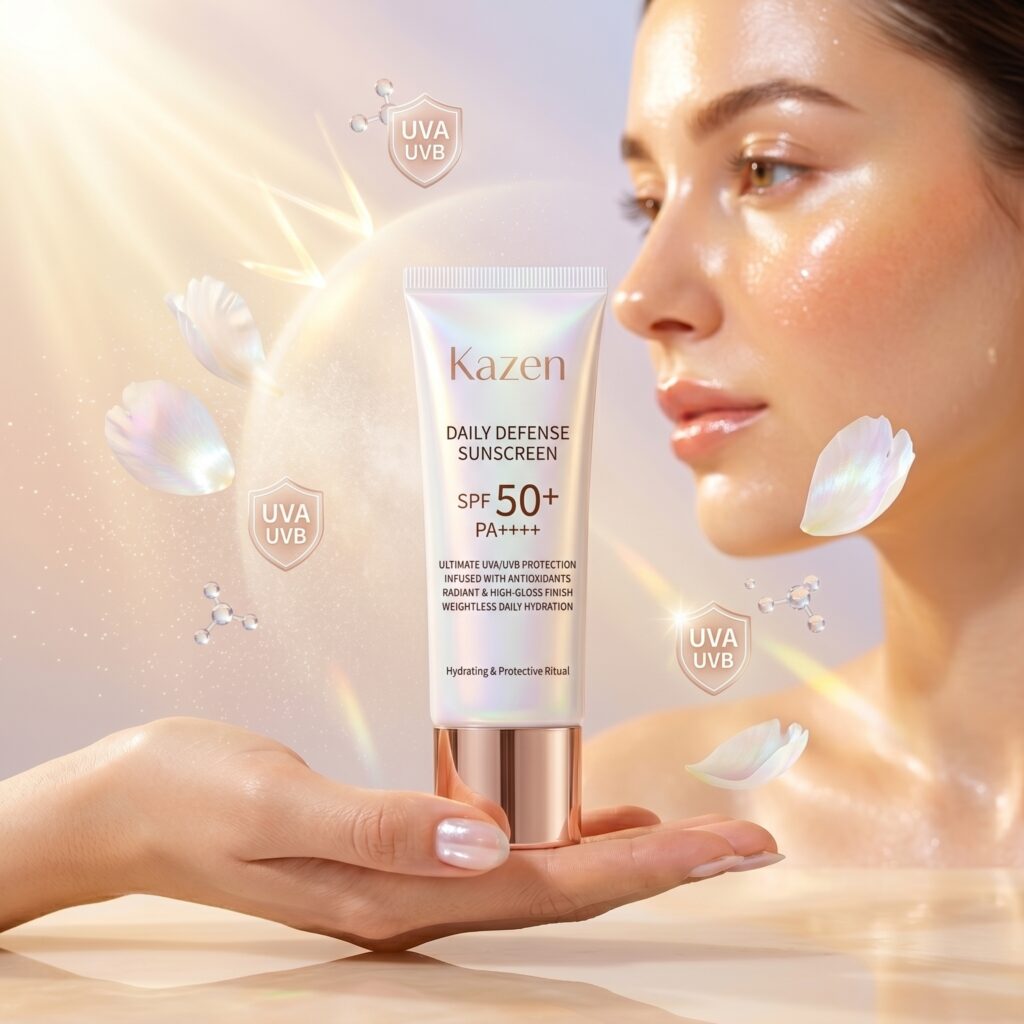
India sits between 8°N and 37°N latitude—a UV hotzone. On a clear summer day in Mumbai or Delhi, the UV Index routinely hits 10–12 (Extreme). Even on overcast days, 80% of UV radiation penetrates clouds. If you’re not wearing sunscreen daily, your skin is bearing the brunt of it.
UV Radiation: UVA vs UVB — What’s the Difference?
UVB rays cause sunburn. They’re strongest between 10am and 4pm and vary seasonally. The SPF number on your sunscreen measures UVB protection.
UVA rays penetrate deeper into the dermis, causing photo-ageing (wrinkles, loss of elasticity), and they’re present all day, year-round—even indoors if you sit near windows. UVA is why “PA” ratings matter alongside SPF.
What Does SPF Actually Mean?
SPF 30 blocks ~97% of UVB rays. SPF 40 blocks ~97.5%. SPF 50 blocks ~98%. The difference between SPF 30 and 50 is small in raw percentage—but the gap matters when you’re applying inadequate amounts (which most people do).
The key finding from dermatology research: Most people apply 25–50% of the required amount of sunscreen. If you’re applying SPF 50 at half the correct quantity, you’re getting roughly SPF 7 protection. Apply a nickel-sized amount (or two finger lengths) for face and neck.
The PA Rating System
PA ratings (PA+, PA++, PA+++, PA++++) measure UVA protection. They originated in Japan and are now standard in Asian sunscreen formulations. Minimum PA+++ is recommended for Indian conditions.
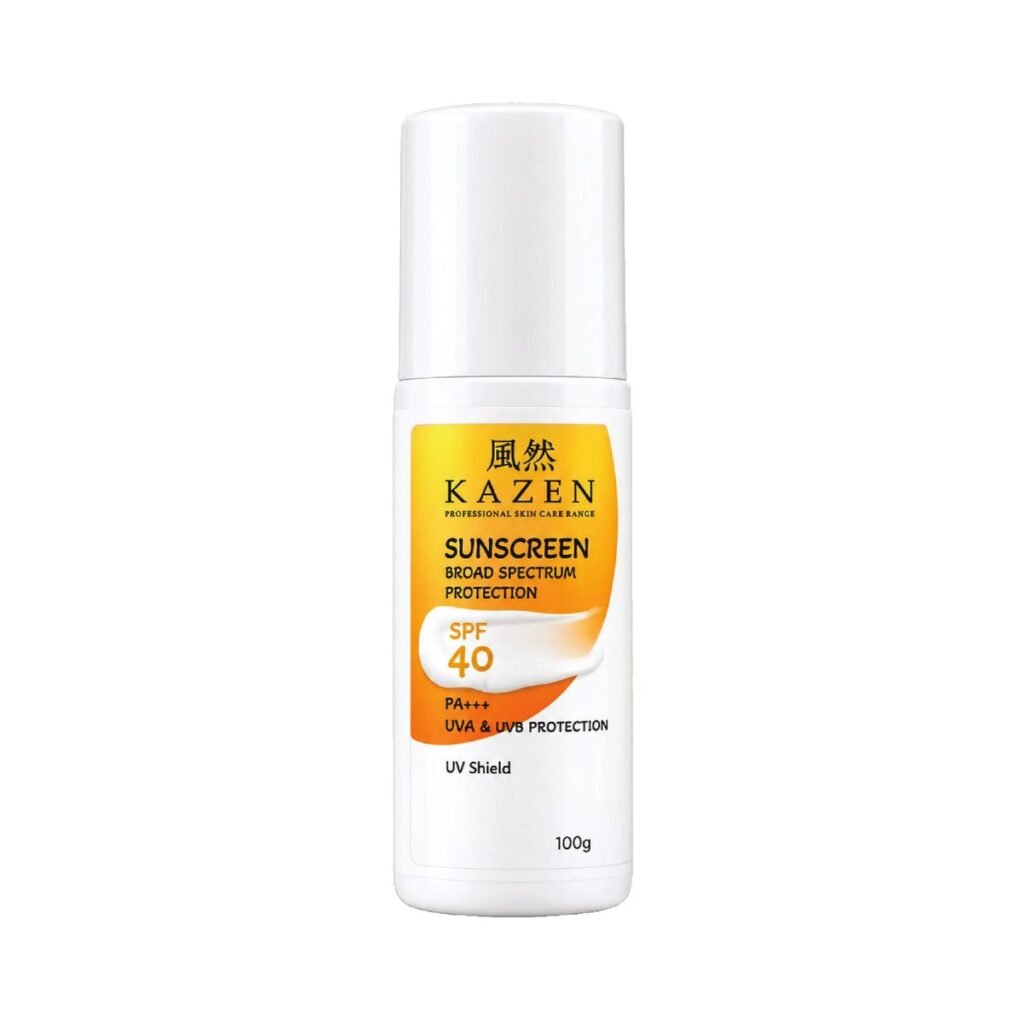
Looking for one? KAZEN UV Shield SPF 40 PA+++ sunscreen is a broad-spectrum, non-greasy daily sunscreen for the face and neck.
Chemical vs Mineral Sunscreen
Chemical/Organic sunscreens (with filters like avobenzone, octinoxate, homosalate) absorb UV radiation and convert it to heat. They’re lightweight, easier to formulate into non-white-cast products, and cosmetically elegant—a significant consideration for darker skin tones where white cast is visually noticeable.
Mineral sunscreens (zinc oxide, titanium dioxide) sit on the skin and physically block UV. They’re preferred for sensitive and acne-prone skin. Modern micronised mineral formulas have reduced the white cast issue substantially.
How Sunscreen Prevents Hyperpigmentation
UV exposure is the primary trigger for melanin overproduction. For Indian skin—already melanin-rich and prone to PIH—daily SPF is the single most impactful step for an even complexion. Every brightening serum you use is undermined if you don’t protect that skin from further UV stimulation.
No SPF = undoing your serum investment.
When to Apply and Reapply
- Apply as the last step of your morning skincare routine, 15–20 minutes before sun exposure
- Reapply every 2 hours if outdoors
- Reapply after swimming or heavy sweating
- Apply even on WFH days if you sit near a window
The Right Sunscreen for Your Skin Type
- Oily/acne-prone: Water-based or gel formulas, non-comedogenic rating
- Dry skin: Cream-based formulas with added moisturising agents
- Sensitive skin: Mineral-only formulas, fragrance-free
- All skin types wearing makeup: Powder SPF for midday reapplication without disturbing makeup
Sun protection is the highest-ROI skincare step available. Whatever else is in your routine, SPF comes first—always.
Published June 18, 2026 · 3 min read